The Best Strength Training Exercises for Women Over 40 in the Triangle

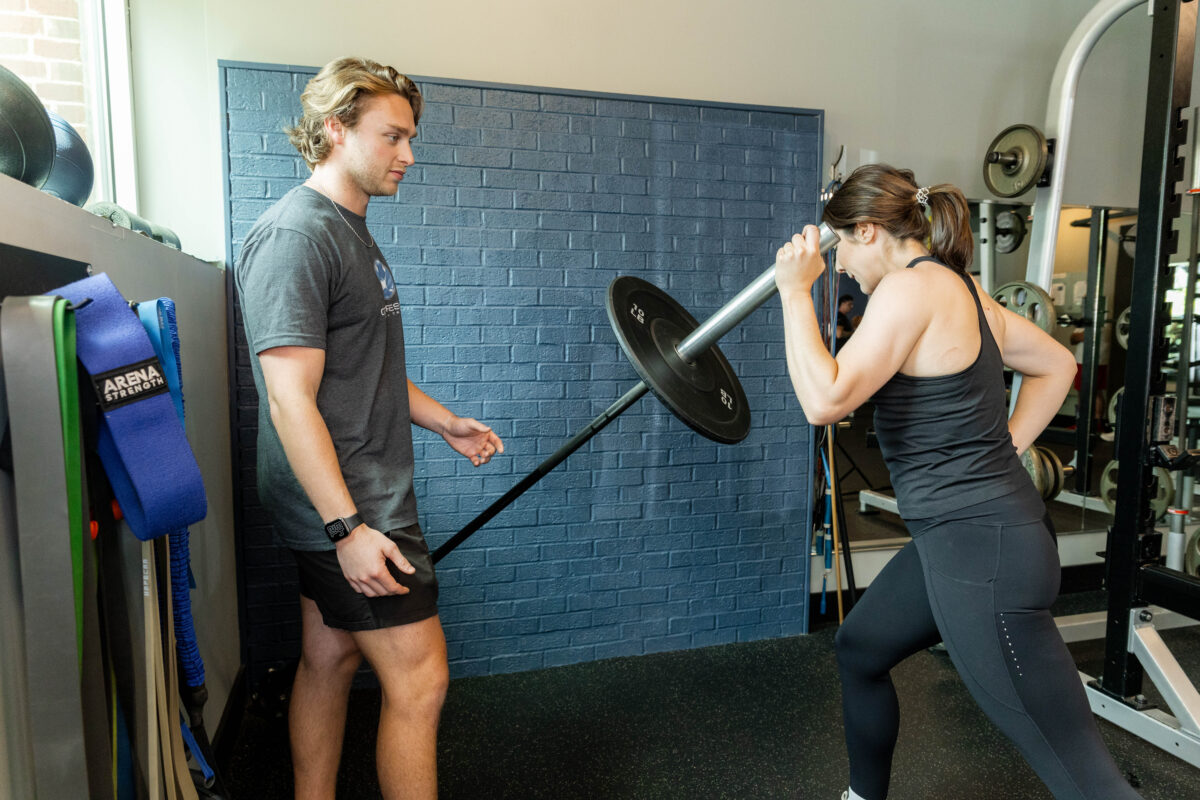
Woman Strength Training Raleigh Studio

WOMEN’S FITNESS · TRIANGLE NC

How lifting weights transforms your body, your hormones, and your bones — in Raleigh, Cary, and beyond.

CORE RESULTS PERSONAL TRAINING · MAY 2026 ·10 MIN READ

If you live in Raleigh, Cary, North Hills, Midtown, Cameron Village, or anywhere else across the Triangle and you’re a woman in your 40s or beyond — this article was written specifically for you.

You may have noticed that the body you had at 35 responds differently now. Weight settles around the midsection more easily. Sleep isn’t as restorative. Energy ebbs. And perhaps you’ve heard that your bone density is starting to quietly decline. These changes are real, and they’re biological — but they are not inevitable.

The most powerful tool available to women over 40 is not a fad diet, a waist trainer, or another HIIT class. It is progressive strength training. Backed by decades of research and championed by the top sports medicine and endocrinology physicians in the country, resistance training is the single greatest investment a woman over 40 can make in her long-term health, vitality, and quality of life.

“Strength training isn’t about looking a certain way. For women over 40 in the Triangle, it’s about feeling powerful, staying healthy, and living fully — on your terms.”

At Core Results Personal Training, with boutique studios in Raleigh (off Wade Avenue and St. Mary’s Street) and Cary (at Cary Parkway and Tryon Road), we’ve worked with hundreds of women across this demographic over more than a decade. In this guide, we’ll walk you through the best exercises, explain the science behind the benefits, and show you exactly why the Triangle is one of the best places in the country to invest in your fitness.

Weight Loss & Metabolism

Lean muscle is metabolically active tissue — it burns calories around the clock, even at rest. As women enter their 40s, muscle mass naturally declines (a process called sarcopenia), slowing the metabolism. Strength training reverses this, rebuilding the metabolic engine that makes sustainable fat loss possible.

Muscle burns ~6–10 cal/lb daily at rest vs. ~2 cal/lb for fat tissue

Hormone Regulation

Perimenopause and menopause bring significant hormonal shifts — falling estrogen, rising cortisol, insulin resistance. Progressive resistance training improves insulin sensitivity, reduces cortisol levels, and stimulates growth hormone and IGF-1 production, acting as a natural regulator of the hormonal environment in a way that cardio alone cannot match.

Studies show resistance training can reduce cortisol reactivity by 15–20%

Bone Density

After 40, women lose roughly 1% of bone density per year — a rate that accelerates dramatically at menopause. Weight-bearing and resistance exercises place mechanical stress on bones, stimulating osteoblast activity and new bone formation. This is one of the most evidence-based, non-pharmacological interventions against osteoporosis available.

Post-menopausal women lose up to 2% bone density per year without intervention


Personal Trainer Raleigh studio

THE EXERCISES

Seven Essential Strength Training Movements for Women Over 40

These compound and accessory exercises form the foundation of every effective training program for women in their 40s and 50s. Each targets multiple muscle groups, drives real results, and is safely scalable with proper coaching.

01

The Deadlift (and Romanian Deadlift)

The deadlift is the single most effective posterior chain exercise available. It strengthens the glutes, hamstrings, lower back, traps, and core in one coordinated movement. The Romanian deadlift variation is especially valuable for women over 40 — it emphasizes the hamstrings and glutes through a longer range of motion with less spinal compression.

From a bone density standpoint, loading the spine and hips axially through deadlifts is one of the most direct stimuli for bone formation in the lumbar spine and femoral neck — precisely where osteoporosis is most dangerous. It also supports healthy hip hinge mechanics, reducing lower back pain common among desk workers in Raleigh’s tech and healthcare corridors.

02

Goblet Squat & Back Squat

Squatting patterns are fundamental human movement. The goblet squat — holding a dumbbell or kettlebell at the chest — is an ideal entry point for women new to resistance training, teaching proper depth and bracing technique. The back squat (barbell) represents a progression that maximally loads the quads, glutes, and spinal erectors.

Squats done with meaningful load drive significant growth hormone and testosterone secretion — the hormonal response that makes strength training so powerful for body composition and energy levels in women navigating perimenopause. The axial loading also directly stimulates femoral and tibial bone density.

03

Hip Thrust

The hip thrust is the most direct glute-loading exercise available. Unlike squats and deadlifts, it targets the gluteus maximus in its most shortened position — the top of hip extension — producing superior glute activation compared to almost any other movement.

For women over 40, strong glutes are non-negotiable. They protect the lower back, support knee health, and play a major role in pelvic floor function — an area of particular importance for women in this age group. Barbell hip thrusts also place compressive and tensile loads through the pelvis, contributing to bone health in the hip region.

04

Dumbbell Row & Seated Cable Row

The upper back is critically underworked in most women — and in most gym programs. Rowing movements train the rhomboids, mid-traps, rear delts, and lats, counteracting the forward-rounded posture that develops from long hours at a desk or a steering wheel. This is a concern across Raleigh’s Research Triangle Park workforce and Cary’s growing professional community.

Strong pulling musculature improves posture, reduces neck and shoulder pain, and provides functional strength for daily life. Rows with meaningful load also contribute to thoracic spine bone density, an often-overlooked area of osteoporosis risk.

05

Overhead Press (Dumbbell or Barbell)

Overhead pressing builds the shoulders, triceps, and upper chest while requiring the core to stabilize the spine under axial load. It is one of the most functional upper body movements — translating directly to activities like lifting groceries, reaching overhead, and playing with grandchildren.

The hormonal benefits of compound pressing movements are well-documented. Heavier upper body pressing stimulates systemic anabolic hormone release, contributing to the body-wide hormonal environment that supports lean muscle retention and fat metabolism in women over 40.

06

Bulgarian Split Squat & Reverse Lunge

Single-leg training is essential for women over 40 for one important reason: life is conducted on one leg at a time. Walking, climbing stairs, hiking the trails at Umstead State Park or Lake Crabtree, navigating the stairs at PNC Arena — these all demand single-leg strength and stability.

Bulgarian split squats and reverse lunges build each leg independently, correcting imbalances that accumulate over decades. They also challenge the stabilizing muscles of the hip and knee, directly reducing the risk of the falls that become increasingly dangerous as bone density declines.

07

Farmer’s Carry & Loaded Carries

Loaded carries — walking with heavy dumbbells, kettlebells, or a trap bar — are deceptively simple and extraordinarily effective. They train the grip, core, traps, and stabilizing musculature of the entire body simultaneously. They also build the kind of functional, real-world strength that makes daily life easier.

From a hormonal perspective, carrying heavy loads elevates growth hormone more than almost any isolated exercise. The axial and compressive loading also stimulates bone formation throughout the spine, hips, and wrists — three of the most fracture-prone sites in women with osteoporosis.

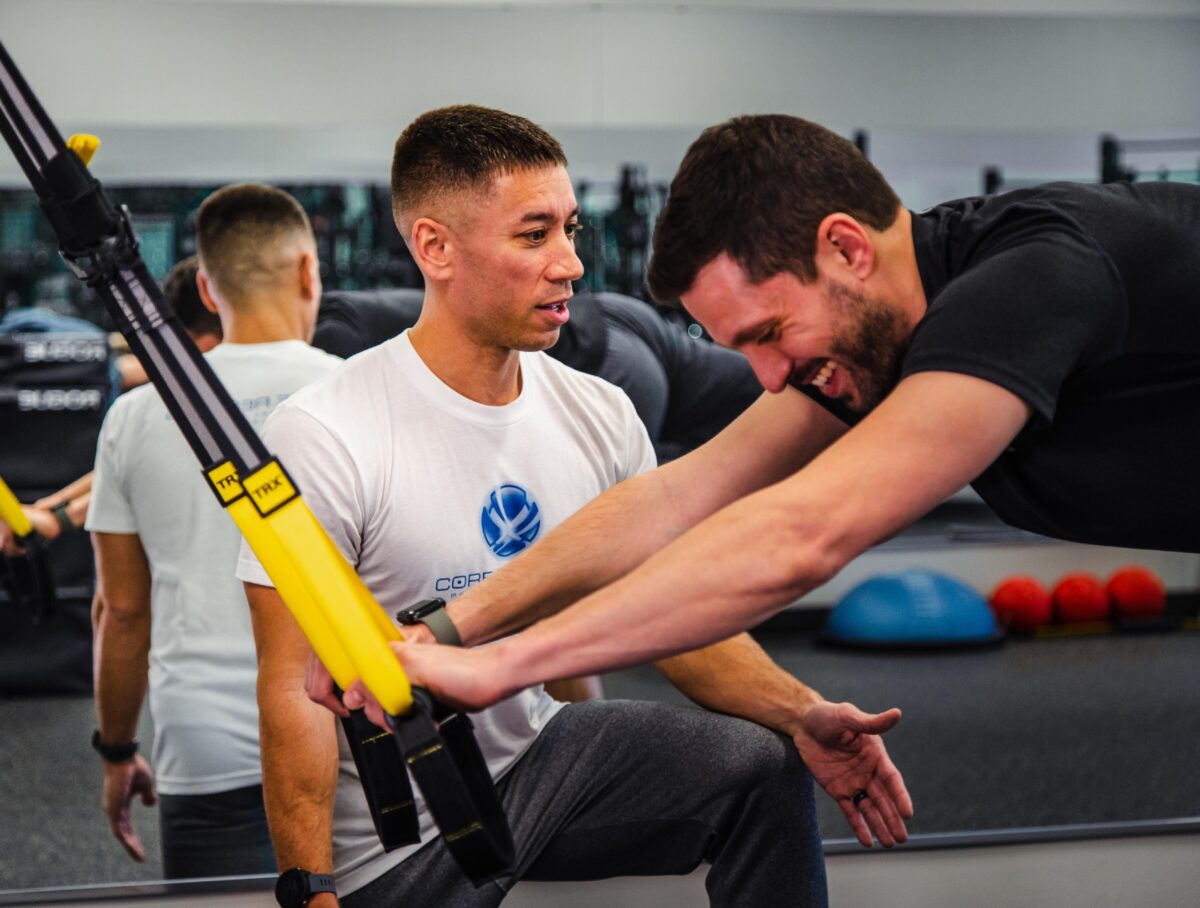
Personal Trainer working with a senior client at Raleigh studio.

FREQUENTLY ASKED QUESTIONS

Strength Training for Women Over 40: Your Questions Answered

The questions we hear most often at our Raleigh and Cary studios — answered honestly.

Will I bulk up if I start lifting weights?

No — and this is one of the most persistent and harmful myths in women’s fitness. Women do not have the hormonal profile (primarily testosterone levels) required to build large, bulky muscles without extraordinary effort, supplementation, and genetic predisposition. What strength training does for women over 40 is build lean, dense muscle that gives the body a firmer, more defined appearance — while dramatically improving function and health markers. Every woman at Core Results who has feared “getting bulky” has emerged from their first several months looking and feeling more lean, not more muscular in any unwanted way.

I have knee pain / back pain. Can I still do strength training?

Almost certainly yes — and strength training may be the best thing for it. Many of our clients at Core Results come to us with pre-existing pain, often on physician recommendation. Properly programmed strength training builds the supporting musculature around joints, reduces inflammation markers, and frequently eliminates pain that clients assumed was permanent. The key is working with a certified trainer who can assess your movement, select appropriate exercises, and progress safely. We never put someone through a movement that causes pain.

How many days per week should I strength train?

For women over 40, 2–3 days per week of focused, progressive resistance training is the sweet spot for most goals. This allows adequate recovery — which becomes increasingly important with age, as muscle protein synthesis takes slightly longer. Quality of sessions matters far more than volume. Two well-programmed, properly executed sessions per week will outperform five scattered, unfocused ones every time.

How quickly will I see results from strength training?

Most women notice meaningful changes in strength and energy within 4–6 weeks of consistent training. Visible body composition changes typically become apparent around 8–12 weeks. Improvements in bone density are measurable via DEXA scan after 6–12 months of consistent, progressive loading. Sleep quality, mood, and energy levels often improve within the first few sessions — clients regularly report these “invisible” results before any physical changes are apparent in the mirror.

Does strength training help with menopause symptoms?

Yes, significantly. Research consistently shows that progressive resistance training reduces the severity of hot flashes, improves sleep quality, decreases anxiety and depression symptoms, and supports healthy weight management during perimenopause and menopause. By improving insulin sensitivity and supporting healthy cortisol levels, strength training acts as one of the most effective lifestyle interventions for the hormonal transition women in their 40s and 50s navigate.

SERVING THE TRIANGLE

Ready to Start? Core Results Has Two Locations Serving Women Across Raleigh, Cary & the Triangle

Whether you’re in Cameron Village, North Hills, Brier Creek, Lochmere, Waverly Place, Apex, or Holly Springs — Core Results has a boutique personal training studio near you. Your first session is completely free, no strings attached.

Raleigh Studio

1330 St. Mary’s St., Suite A001

Raleigh, NC 27605

(984) 789-8406

Near Wade Ave · Five Points · Cameron Village · North Hills

Cary Studio

6456 Tryon Rd.

Cary, NC 27518

(984) 789-8406

Near Waverly Place · Lochmere · Prestonwood · Apex · Holly Springs

BOOK YOUR FREE FIRST SESSION →No pressure. No commitment. Just a real conversation about your goals and a session to experience the Core Results difference.

THE BOTTOM LINE

Strength Training Is the Most Important Investment a Woman Over 40 Can Make in Herself

Not a luxury. Not something to start “when things calm down.” A priority.

The Triangle is home to some of the most educated, high-achieving, and driven women in the country. Many of you have spent your 30s and 40s building careers, raising families, and showing up for everyone else. Strength training is how you show up for yourself — and how you ensure that the next decade is not one of gradual decline, but of continued strength, vitality, and capability.

The research is unambiguous: women who resistance train consistently in their 40s enter their 50s, 60s, and beyond with more muscle, stronger bones, more regulated hormones, and significantly better quality of life. This isn’t vanity. This is longevity.

At Core Results Personal Training, every client gets a trainer matched specifically to her goals, history, and schedule. Every program is built from scratch — not a template. And every first session is free, because we believe you should experience what exceptional, individualized coaching feels like before you make any decision.

“The women who come to us at 42 wondering if it’s too late inevitably tell us, two years later, that starting when they did was the best decision they ever made.”

If you’re a woman over 40 in Raleigh, Cary, North Hills, Brier Creek, Apex, Morrisville, or anywhere else across the Triangle — Core Results Personal Training is here, and we’re ready to get to work.

© 2026 Core Results Personal Training · Raleigh & Cary, NC · (984) 789-8406 · info@coreresults.net

Serving women over 40 in Raleigh, Cary, Apex, Holly Springs, Morrisville, Knightdale, & .

Stretch Your Limits with Pre & Post Workout Lengthening Exercises

One of the most valuable actions you can take post and pre-workout is simple to do but often overlooked. Stretching before you push your body to the limit can both help you reach new plateaus and prevent you from occurring injury in the process.

Stretch your limits with pre and post workout lengthening exercises. Each time you stretch, you are giving your muscles the opportunity to lengthen to their full potential. This simple movement provides great benefits. When muscles are long, they are less likely to feel tight, naturally resulting in the ability to make a larger range of motion without consequence. Muscles can also build strength more easily when long, versus short because they are able to work at their full capacity.

Have you ever sat in one position for too long, perhaps in front of the computer at work with your head hunched forward. When you went to stand up, the small of your back felt tight and painful. This is the result of muscles shortening from not being used for a period of time. Once muscles are shortened, they are weakened, resulting in a greater likelihood of injury. Pre and post workout stretching helps battle this common occurrence, reducing your chance of injury from exercise and other physical activities throughout the day.

In an article published by Harvard Health, PT, David Nolan, of Massachusetts General Hospital, emphasizes the importance of stretching for everyday health. “A lot of people don’t understand that stretching has to happen on a regular basis. It should be daily.” For optimal effectiveness, stretch before and after each workout. Hold each stretch for about 30 seconds. Once you begin stretching, remember flexibility takes time, particularly when muscles have been shortened for a long period of time.

At Core Results, our personal trainers understand the importance of pre and post workout stretches and will incorporate a variety of lengthening techniques into your exercise plan to build and improve upon your level of flexibility. Contact us for your first FREE consult today!

How Often You Need to Workout for Optimal Results

Alternating between cardio and strength training exercises helps provide the variety you need for success. When developing an exercise plan, one of the main elements to consider is how often you will be working out as well as the duration of each session. There is no one size fits all solution. How much exercise you really need depends on your individual workout goals.

Most exercise plans recommend a minimum of five sessions of 30-minute moderate to vigorous cardio workouts and at least two sessions of strength training each week. The right amount for each individual varies depending on their goals, workout intensity and current fitness level, e.g., beginner, intermediate or expert.

Rest days are essential for muscle and mental recovery between workout sessions. Taking time off from exercising not only gives your muscles a chance to recoup but also gives you a mental break so you can recharge and return that much more dedicated to the cause.

Think about it. After a weekend away from the job, don’t you feel more refreshed when you go back to work? The same concept applies to exercise. How long you need to rest depends on the intensity of your workout sessions.

A recent study on Olympic rowers found a significant reduction in bone building protein and an increase in painful inflammation during periods of non-stop training versus periods with rest days built in. This, among other research findings, demonstrates the detrimental effects that can occur when rest is not incorporated into vigorous exercise plans.

More intense workouts require more rest in between sessions, while some forms of moderate exercise can be carried out on a daily basis without consequence.

Light physical activities, such as walking or stretching, can be incorporated into rest days. Most personal trainers recommend at least one full day of rest for all exercise plans. When making an exercise plan, strategically plan your days of rest to occur after your more intense workout days, e.g. max out days, race days and other days of high performance activity.

One thing to keep in mind is that a day of rest for one muscle group doesn’t necessarily mean you have to rest from working out altogether. By including exercises that work different muscle groups throughout the week, you can avoid overuse of the same muscles and reduce the risk of injury, all while obtaining the full body results you are looking to achieve.

Also remember to switch things up. Whether you are aiming to lose weight or build strength, you can avoid reaching the dreaded plateau by switching up your workout frequency. Replacing a long distance run with short intervals, for example, will significantly shorten your exercise time. The time you gain from alternating your workout can then either be applied to another focus area or used for much needed rest.

At Core Results, our personal trainers will work with you to best determine your workout frequency and duration, check your progress and mix it up as needed for optimal results. Contact us for your first FREE session today!

3 Reasons Why You Want to Switch up Your Workout Routine

Switching up your workout routine not only boosts new muscle growth but also helps keep you in the race for the long run. Let’s face it, we are creatures of habit. Once you find a couple of exercises that you enjoy, it is all too easy to get into a workout groove where you do the same movements over and over. While we all need regular exercise, it is important to remember to switch up your workout routine for optimal results.

Variety Holds Interest

Fitness takes commitment. If you do the same workout every time, you will see fewer results and lose drive. The likelihood of continuing an exercise plan for the long hall is significantly greater when you switch up your workout routine. Simple changes, like adding speed intervals to your regular pace, will leave you feeling invigorated and pumped for the next challenge. 

Results All Around

If you are looking for full body results, it is essential to include a variety of exercises that will strengthen muscles that you do not ordinarily use. Even muscles that you do use regularly reach a plateau if you are working them in the same way every time. When it comes to strength training, you can switch it up by changing your weightlifting frequency, the number of sets and reps you do and the amount of weight you use.

Reduced Risk of Injury

Working out the same muscles repetitively over a period of time can also result in muscular imbalances. This creates a higher risk of injury, particularly when taking on a new physical activity that requires the use of the weaker or shortened muscles. Joints movement is also significantly limited: an additional risk for injury. When runners, for example, are quad dominant, the hamstring muscles shorten. As a result, both the weakened hamstring and knee are more vulnerable to injury.

The risk of developing repetitive strain injury can also be avoided by switching up your routine. As it sounds, this type of injury occurs when you do the same motion repetitively for an extended period of time. Overuse of muscles and tendons result in the gradual development of symptoms like pain, stiffness and weakness. Athletes, manual laborers and others who use the same muscles to perform a task on a regular basis, can avoid incurring this type of injury by including exercises that strengthen the stabilizer muscles. 

Whether strength training at the gym or hitting the trail, it is important to mix up your workout routine for maximum results. When you work with a personal trainer, coming up with new workout routines will be a struggle of the past. Your trainer will work with you to identify the results you are looking to achieve and develop a versatile exercise plan custom tailored to you.

Exercise & Nutrition: The Key to Maximum Weight Loss

If you feel as though you need to lose weight, you have taken the first step towards a healthier lifestyle. The two main components of losing weight are also overwhelmingly beneficial to your overall health: nutrition and exercise.

The need to lose weight is widespread. A 2015-2016 report by the Centers of Disease Control and Prevention (CDC) indicates that more one third of the U.S. population is considered obese. According to the CDC, health conditions associated with obesity include, “heart disease, stroke, type 2 diabetes and certain types of cancer that are some of the leading causes of preventable, premature death.” While the implications are serious, the solution is simple. You can significantly reduce your risk of obesity and associated health conditions by eating healthy and regularly engaging in moderate to intense physical activity.

Nutrition

Eating healthy will not only help you lose weight but also makes you feel better.  Proteins boost your metabolism, have been shown to curb cravings and even release amino acids that help build muscle mass when it comes time to exercise. Vegetables that are low in carbohydrates, like broccoli and tomatoes, are also very low in calories, so you can eat a lot of them with no fear of calorie intake.

While you want to lower your overall calorie intake for weight loss, it is important to remember to adequately fuel yourself throughout the day. This helps prevent setbacks when it comes to sticking to a diet and is best accomplished by selecting the right kinds of foods (healthy fats are okay!) and consuming them at the right times. This is where having someone to keep you on track is particularly beneficial. When you work with a personal trainer, he or she will take the time to understand your needs and your lifestyle, then help you build a sustainable meal plan that will keep you on track as you hit your goals along the way.

Exercise

When it comes to exercise for weight loss, your best bet is a combination of weight training and cardio. When weight training to lose pounds, you need to complete a high number of reps at a high level of intensity. You can gauge the intensity by your energy level as well as your physical ability to complete a set. For optimal weight loss results, push yourself to do as many reps as you can each time you exercise.

For cardio, our personal trainers recommend a variety of exercises in terms of resistance, speed and intensity, for optimal results. By mixing up cardio exercises, you get more of a full body workout, engage more muscles and burn fat in more areas, all key elements of a successful weight loss exercise plan.

While the solution is indeed simple, many people have difficulty sticking with exercise and nutrition plans to lose weight. For weight loss plans to be successful, they have to be seen all the way through. This is where working with a personal trainer makes all the difference.

When you come to Core Results Personal Training for weight loss, there are three main tools our trainers will use to help you lose weight: weight training, cardio and diet. Your trainer will work with you to determine how many reps and the level of intensity needed for each set to maximize your weight loss results. When cravings threaten to push you astray, your personal trainer will help you keep your eyes on the prize. Contact us for your first FREE consultation today!

Free Weights vs. Machine Weights: A Comparison of the Two

There is a lot of debate in the fitness world on whether free weights or machine weights are more effective. Both methods have their advantages. Free weights are less limiting when it comes to range of motion, enabling you to strengthen a wider range of muscle groups. Machine weights, offer a different advantage: the ability to isolate and target specific muscles. Below you will find a breakdown of the differences and benefits as well as tips to combine the two for optimal results.

Free Weights

The free weight advantage: pros of using free weights include an increased capacity to build strength in the stabilizer muscles and increased versatility.

When using free weights, both the muscles you target and your stabilizer muscles get a workout. Which muscles are stabilizers you may ask? It all depends on the type of exercise you are doing. Stabilizer muscles are those that keep your body balanced and steady when performing a set. The stronger your stabilizer muscles are, the less likely you are to incur an injury both in the gym and out on the field.

Another advantage is increased versatility. With free weights, your options are essentially limitless. A set of dumbbells can be used to work everything from your glutes to your biceps. For additional muscle mass, simply increase your weight as you go along.

Tip: While free weights give you the ability to perform a wider range of motion, it is important to remember to use the proper technique to avoid injury. Your personal trainer will not only show you how to do a free weight exercise, but will also correct you as needed to ensure it is done safely. 

Machine Weights

The machine weight advantage: pros of using machine weights include the ability to isolate specific muscles and reduced risk of injury.

The ability to isolate muscle groups is particularly advantageous when fulfilling muscle specific workout plans or post rehabilitation. Physical therapists often prescribe isolation exercises post surgery to strengthen muscles that have weakened from lack of use.

Isolation can also be helpful to solve for muscular imbalances, e.g., quad dominance. Because machines essentially force you into the proper technique/position, there is less likelihood that further injury will occur and less of a learning curve for beginners.

Benefits of Combining the Two

Both free weights and machine weights have their advantages. Fortunately, you do not have to choose between the two. In fact, the best exercise plans include a combination of free and machine weights for optimal strength and conditioning.

Whether you are looking to increase strength, lose weight or recover from a past injury, our personal trainers will work with you to develop a comprehensive exercise plan. They will show you how to use each set of equipment, check for comprehension and ensure the proper technique for optimal results. Learn more about what to expect from our trainers at Core Results.

The Key to Pain Management: A Stronger Core

It is estimated that up to 20% of U.S. adults experience back pain within the course of a year, and up to 80% of adults experience back pain over the course of their lifetime. Time spent sitting in front of the television, working on the computer, driving in the car and attending class or meetings is largely stationary, involving little if no movement at all. Much of today’s society is spent engaging in physically inactive activities.

Our bodies naturally counteract physical inactivity by tightening up. This can lead to stiffening, joint immobility and pain overtime. In some cases, postural issues can develop. Fortunately, good personal training can help counteract inactivity and its negative impact on the body.

Individualized exercise is also an effective way to reduce and manage pain in people who have been injured or who are recovering from injuries. Personal trainers help develop and implement corrective exercise strategies for optimal recovery. Flexibility and compression techniques may be utilized to reduce muscle tension. When it comes to personal training for pain reduction, there are two main steps to follow.

1. Retrain the joint.

By retraining the joint, you are improving your mobility, meaning you can move in larger motions without pain.

2. Reinforce the area.

This involves strengthening your muscles. Strong, supportive muscles help alleviate pain. And any likelihood of future pain resulting from injury is greatly reduced.

Exercises that increase both flexibility and core strength, like pilates and yoga, are particularly valuable for pain reduction. Even isolated muscles that go unused in relatively active individuals can be cause for pain in certain areas.

Neck and back pain, shoulder pain and knee pain are all common ailments that can be greatly improved with good personal training.  Neck and back pain is alleviated with large, controlled motions of the spine. Knee-to-chest exercises help relieve pressure stemming from spinal stenosis or narrowing areas of the spine. Resistance training targeting the muscles around the scapula helps in the recovery of rotator cuff inflammation or tears in the shoulder area. Tendon tightness and overall weakness of the knee can also be overcome with personal training for pain reduction.

Serious pain is no joke. If you have a chronic condition, you need an individualized exercise plan tailored to your needs for optimal safety and results. Our team of personal trainers is highly experienced in corrective exercise and how it can be utilized to heal from and prevent further injury. Take the first step towards pain reduction with a stronger core. Sign up for a free session with Core Results Personal Training today!

Get the Results You Want with Fast Paced Exercise, Resistance Training & Light Calisthenics

Looking to get fit but not sure where to start? Fast paced exercises, resistance training and light calisthenics are all great methods for getting the results you want.

Fast Paced Exercise  

Fast paced exercises are high in intensity and often the primary component of full body workouts like cross fit and circuit training.

Results: Improved body function, metabolism, movement and performance.

Additional benefits include time efficiency. Fast paced workouts, like the tabata sequence, can be completed in less than 30 minutes, an ideal solution for those looking for a way to get fit without dedicating a lot of time. The tabata sequence entails engaging in high intensity exercise for 20 seconds followed by 10 seconds of rest. The cycle is then repeated eight times for a total of four minutes of fast paced exercise. For full body results, work a different part of your body for each 4-minute interval, e.g., push ups, walking lunges and kettlebell swings.

Resistance Training

Resistance training includes any exercise when the muscles contract against an external resistance like dumbbells, weight machines, elastic bands or even your own body weight.

Results: Increased strength, tone, mass, and/or muscular endurance.

Common types of resistance exercise include power lifting, Olympic weight lifting, strength training and weight lifting. Increased strength is best achieved by adding weight over time gradually as muscles accustom to each level of resistance. Once a rep feels easy to complete, go ahead and add more weight. This will increase your strength overtime. Beginners typically see the fastest results, as there is a larger window for improvement in the early stages of resistance training. After a few months, gains will level off and additional sets will need to be completed to build additional strength.

How often should you lift for optimal resistance? The American College of Sports Medicine recommends a minimum of two nonconsecutive days each week.

Light Calisthenics

Light calisthenics are exercises that can be achieved at moderate intensity for 10 minutes or more without stopping. Light calisthenics are ideal for beginners, as they can help achieve visible results in a short amount of time.

Results: Increased flexibility, endurance and strength.

Light calisthenics use the whole body cohesively, meaning you are utilizing all of your strength and tension to complete the exercises, which in turn yields full body results. That being said, it is advantageous to start with your core, as it is the center of your strength. A strong core helps strengthen the rest of the body. For fast, visible results in the abdominal region, get started with a few sets of hanging leg raises and windshield wipers. 

Get the results you want with fast paced exercises, resistance training and light calisthenics. Whatever it is you are looking to achieve, Core Results Personal Training will help you get there. After an initial consult, we will design a program based 100% on your needs and goals that will include everything from strength training to cardio, and nutrition. Meet our team of experienced personal trainers today!