The Best Strength Training Exercises for Women Over 40 in the Triangle

Woman Strength Training Raleigh Studio

WOMEN’S FITNESS · TRIANGLE NC

How lifting weights transforms your body, your hormones, and your bones — in Raleigh, Cary, and beyond.

CORE RESULTS PERSONAL TRAINING · MAY 2026 ·10 MIN READ

If you live in Raleigh, Cary, North Hills, Midtown, Cameron Village, or anywhere else across the Triangle and you’re a woman in your 40s or beyond — this article was written specifically for you.

You may have noticed that the body you had at 35 responds differently now. Weight settles around the midsection more easily. Sleep isn’t as restorative. Energy ebbs. And perhaps you’ve heard that your bone density is starting to quietly decline. These changes are real, and they’re biological — but they are not inevitable.

The most powerful tool available to women over 40 is not a fad diet, a waist trainer, or another HIIT class. It is progressive strength training. Backed by decades of research and championed by the top sports medicine and endocrinology physicians in the country, resistance training is the single greatest investment a woman over 40 can make in her long-term health, vitality, and quality of life.

“Strength training isn’t about looking a certain way. For women over 40 in the Triangle, it’s about feeling powerful, staying healthy, and living fully — on your terms.”

At Core Results Personal Training, with boutique studios in Raleigh (off Wade Avenue and St. Mary’s Street) and Cary (at Cary Parkway and Tryon Road), we’ve worked with hundreds of women across this demographic over more than a decade. In this guide, we’ll walk you through the best exercises, explain the science behind the benefits, and show you exactly why the Triangle is one of the best places in the country to invest in your fitness.

Weight Loss & Metabolism

Lean muscle is metabolically active tissue — it burns calories around the clock, even at rest. As women enter their 40s, muscle mass naturally declines (a process called sarcopenia), slowing the metabolism. Strength training reverses this, rebuilding the metabolic engine that makes sustainable fat loss possible.

Muscle burns ~6–10 cal/lb daily at rest vs. ~2 cal/lb for fat tissue

Hormone Regulation

Perimenopause and menopause bring significant hormonal shifts — falling estrogen, rising cortisol, insulin resistance. Progressive resistance training improves insulin sensitivity, reduces cortisol levels, and stimulates growth hormone and IGF-1 production, acting as a natural regulator of the hormonal environment in a way that cardio alone cannot match.

Studies show resistance training can reduce cortisol reactivity by 15–20%

Bone Density

After 40, women lose roughly 1% of bone density per year — a rate that accelerates dramatically at menopause. Weight-bearing and resistance exercises place mechanical stress on bones, stimulating osteoblast activity and new bone formation. This is one of the most evidence-based, non-pharmacological interventions against osteoporosis available.

Post-menopausal women lose up to 2% bone density per year without intervention


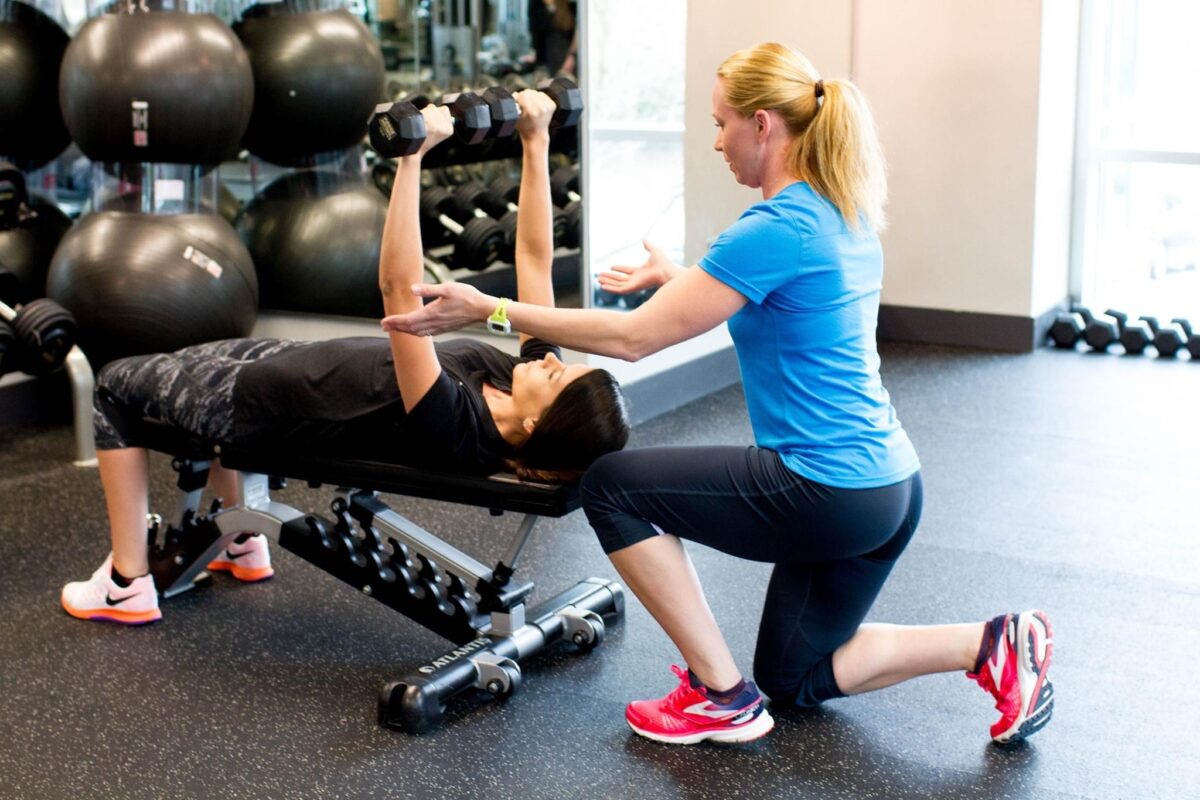
Personal Trainer Raleigh studio

THE EXERCISES

Seven Essential Strength Training Movements for Women Over 40

These compound and accessory exercises form the foundation of every effective training program for women in their 40s and 50s. Each targets multiple muscle groups, drives real results, and is safely scalable with proper coaching.

01

The Deadlift (and Romanian Deadlift)

The deadlift is the single most effective posterior chain exercise available. It strengthens the glutes, hamstrings, lower back, traps, and core in one coordinated movement. The Romanian deadlift variation is especially valuable for women over 40 — it emphasizes the hamstrings and glutes through a longer range of motion with less spinal compression.

From a bone density standpoint, loading the spine and hips axially through deadlifts is one of the most direct stimuli for bone formation in the lumbar spine and femoral neck — precisely where osteoporosis is most dangerous. It also supports healthy hip hinge mechanics, reducing lower back pain common among desk workers in Raleigh’s tech and healthcare corridors.

02

Goblet Squat & Back Squat

Squatting patterns are fundamental human movement. The goblet squat — holding a dumbbell or kettlebell at the chest — is an ideal entry point for women new to resistance training, teaching proper depth and bracing technique. The back squat (barbell) represents a progression that maximally loads the quads, glutes, and spinal erectors.

Squats done with meaningful load drive significant growth hormone and testosterone secretion — the hormonal response that makes strength training so powerful for body composition and energy levels in women navigating perimenopause. The axial loading also directly stimulates femoral and tibial bone density.

03

Hip Thrust

The hip thrust is the most direct glute-loading exercise available. Unlike squats and deadlifts, it targets the gluteus maximus in its most shortened position — the top of hip extension — producing superior glute activation compared to almost any other movement.

For women over 40, strong glutes are non-negotiable. They protect the lower back, support knee health, and play a major role in pelvic floor function — an area of particular importance for women in this age group. Barbell hip thrusts also place compressive and tensile loads through the pelvis, contributing to bone health in the hip region.

04

Dumbbell Row & Seated Cable Row

The upper back is critically underworked in most women — and in most gym programs. Rowing movements train the rhomboids, mid-traps, rear delts, and lats, counteracting the forward-rounded posture that develops from long hours at a desk or a steering wheel. This is a concern across Raleigh’s Research Triangle Park workforce and Cary’s growing professional community.

Strong pulling musculature improves posture, reduces neck and shoulder pain, and provides functional strength for daily life. Rows with meaningful load also contribute to thoracic spine bone density, an often-overlooked area of osteoporosis risk.

05

Overhead Press (Dumbbell or Barbell)

Overhead pressing builds the shoulders, triceps, and upper chest while requiring the core to stabilize the spine under axial load. It is one of the most functional upper body movements — translating directly to activities like lifting groceries, reaching overhead, and playing with grandchildren.

The hormonal benefits of compound pressing movements are well-documented. Heavier upper body pressing stimulates systemic anabolic hormone release, contributing to the body-wide hormonal environment that supports lean muscle retention and fat metabolism in women over 40.

06

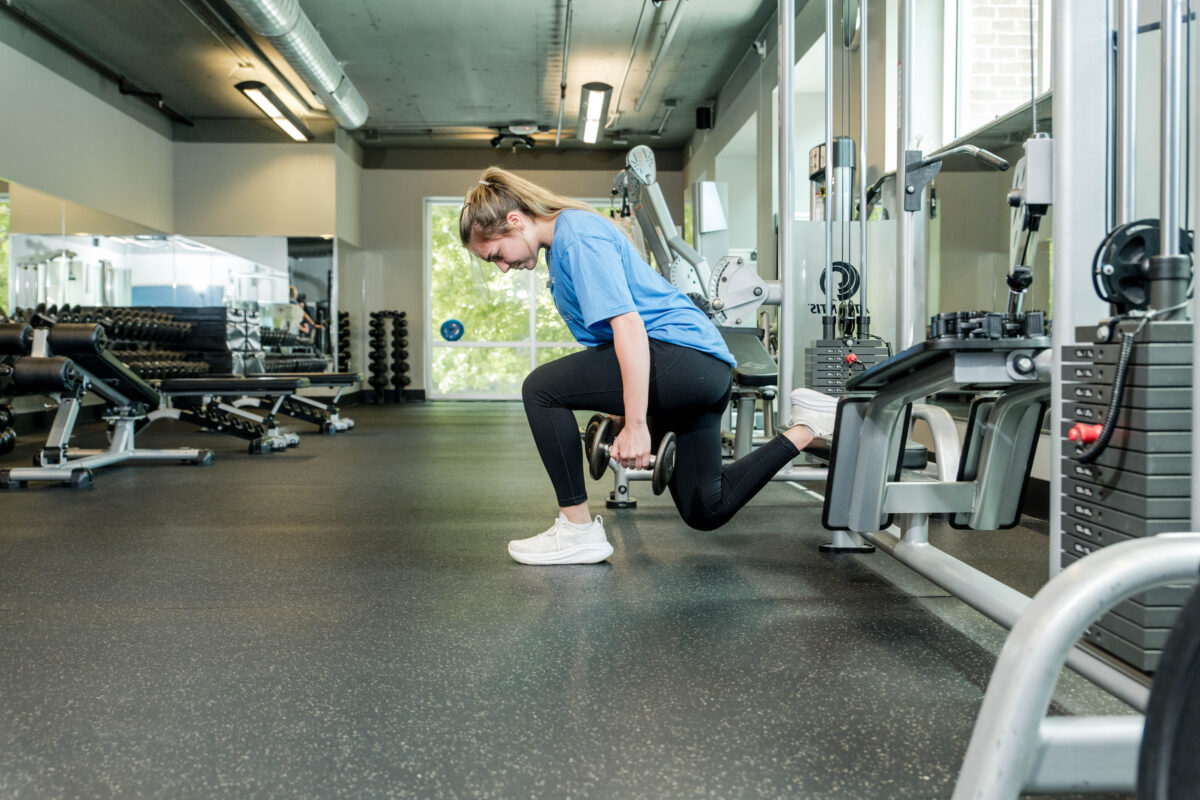
Bulgarian Split Squat & Reverse Lunge

Single-leg training is essential for women over 40 for one important reason: life is conducted on one leg at a time. Walking, climbing stairs, hiking the trails at Umstead State Park or Lake Crabtree, navigating the stairs at PNC Arena — these all demand single-leg strength and stability.

Bulgarian split squats and reverse lunges build each leg independently, correcting imbalances that accumulate over decades. They also challenge the stabilizing muscles of the hip and knee, directly reducing the risk of the falls that become increasingly dangerous as bone density declines.

07

Farmer’s Carry & Loaded Carries

Loaded carries — walking with heavy dumbbells, kettlebells, or a trap bar — are deceptively simple and extraordinarily effective. They train the grip, core, traps, and stabilizing musculature of the entire body simultaneously. They also build the kind of functional, real-world strength that makes daily life easier.

From a hormonal perspective, carrying heavy loads elevates growth hormone more than almost any isolated exercise. The axial and compressive loading also stimulates bone formation throughout the spine, hips, and wrists — three of the most fracture-prone sites in women with osteoporosis.

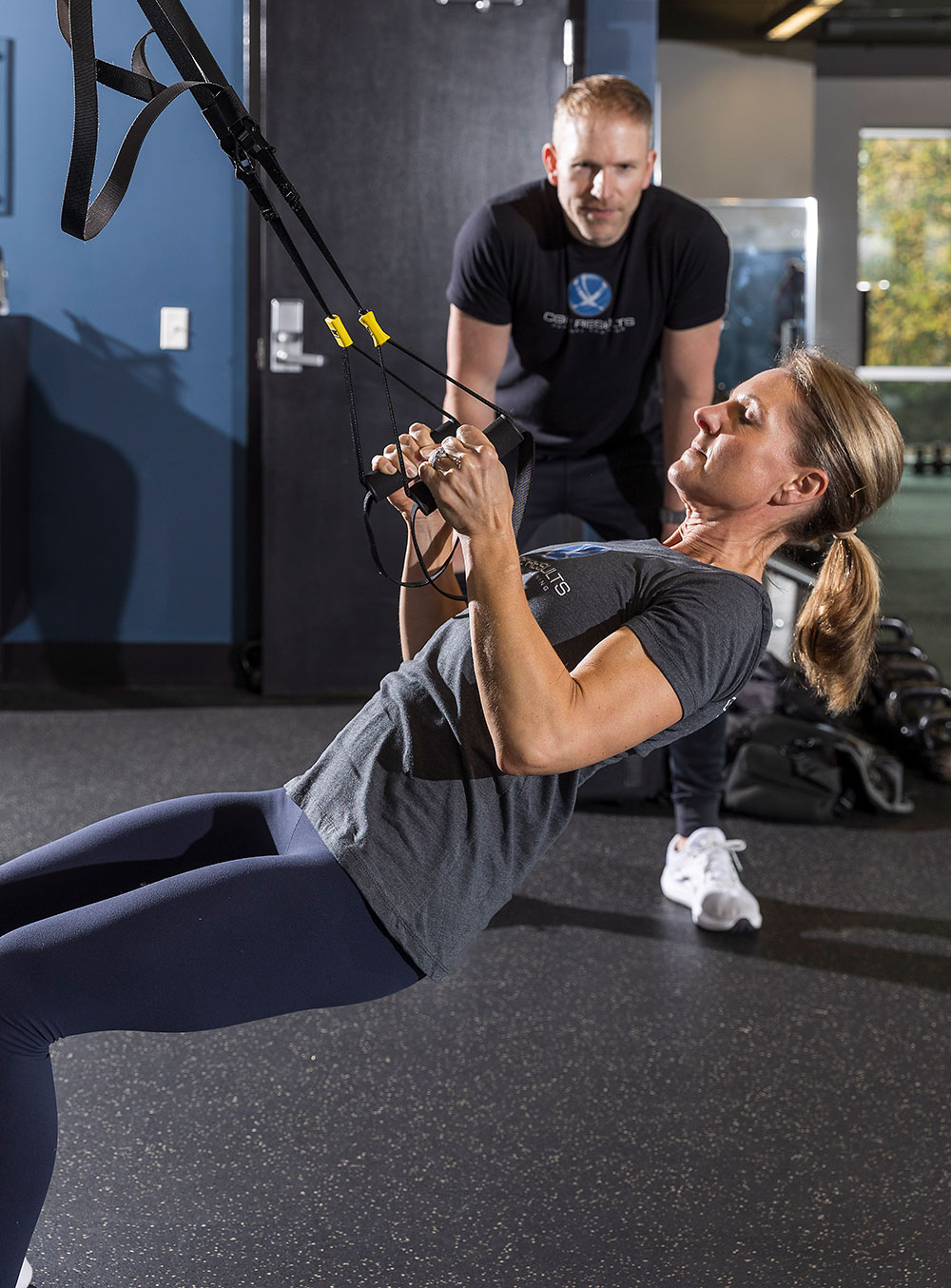
Personal Trainer working with a senior client at Raleigh studio.

FREQUENTLY ASKED QUESTIONS

Strength Training for Women Over 40: Your Questions Answered

The questions we hear most often at our Raleigh and Cary studios — answered honestly.

Will I bulk up if I start lifting weights?

No — and this is one of the most persistent and harmful myths in women’s fitness. Women do not have the hormonal profile (primarily testosterone levels) required to build large, bulky muscles without extraordinary effort, supplementation, and genetic predisposition. What strength training does for women over 40 is build lean, dense muscle that gives the body a firmer, more defined appearance — while dramatically improving function and health markers. Every woman at Core Results who has feared “getting bulky” has emerged from their first several months looking and feeling more lean, not more muscular in any unwanted way.

I have knee pain / back pain. Can I still do strength training?

Almost certainly yes — and strength training may be the best thing for it. Many of our clients at Core Results come to us with pre-existing pain, often on physician recommendation. Properly programmed strength training builds the supporting musculature around joints, reduces inflammation markers, and frequently eliminates pain that clients assumed was permanent. The key is working with a certified trainer who can assess your movement, select appropriate exercises, and progress safely. We never put someone through a movement that causes pain.

How many days per week should I strength train?

For women over 40, 2–3 days per week of focused, progressive resistance training is the sweet spot for most goals. This allows adequate recovery — which becomes increasingly important with age, as muscle protein synthesis takes slightly longer. Quality of sessions matters far more than volume. Two well-programmed, properly executed sessions per week will outperform five scattered, unfocused ones every time.

How quickly will I see results from strength training?

Most women notice meaningful changes in strength and energy within 4–6 weeks of consistent training. Visible body composition changes typically become apparent around 8–12 weeks. Improvements in bone density are measurable via DEXA scan after 6–12 months of consistent, progressive loading. Sleep quality, mood, and energy levels often improve within the first few sessions — clients regularly report these “invisible” results before any physical changes are apparent in the mirror.

Does strength training help with menopause symptoms?

Yes, significantly. Research consistently shows that progressive resistance training reduces the severity of hot flashes, improves sleep quality, decreases anxiety and depression symptoms, and supports healthy weight management during perimenopause and menopause. By improving insulin sensitivity and supporting healthy cortisol levels, strength training acts as one of the most effective lifestyle interventions for the hormonal transition women in their 40s and 50s navigate.

SERVING THE TRIANGLE

Ready to Start? Core Results Has Two Locations Serving Women Across Raleigh, Cary & the Triangle

Whether you’re in Cameron Village, North Hills, Brier Creek, Lochmere, Waverly Place, Apex, or Holly Springs — Core Results has a boutique personal training studio near you. Your first session is completely free, no strings attached.

Raleigh Studio

1330 St. Mary’s St., Suite A001

Raleigh, NC 27605

(984) 789-8406

Near Wade Ave · Five Points · Cameron Village · North Hills

Cary Studio

6456 Tryon Rd.

Cary, NC 27518

(984) 789-8406

Near Waverly Place · Lochmere · Prestonwood · Apex · Holly Springs

BOOK YOUR FREE FIRST SESSION →No pressure. No commitment. Just a real conversation about your goals and a session to experience the Core Results difference.

THE BOTTOM LINE

Strength Training Is the Most Important Investment a Woman Over 40 Can Make in Herself

Not a luxury. Not something to start “when things calm down.” A priority.

The Triangle is home to some of the most educated, high-achieving, and driven women in the country. Many of you have spent your 30s and 40s building careers, raising families, and showing up for everyone else. Strength training is how you show up for yourself — and how you ensure that the next decade is not one of gradual decline, but of continued strength, vitality, and capability.

The research is unambiguous: women who resistance train consistently in their 40s enter their 50s, 60s, and beyond with more muscle, stronger bones, more regulated hormones, and significantly better quality of life. This isn’t vanity. This is longevity.

At Core Results Personal Training, every client gets a trainer matched specifically to her goals, history, and schedule. Every program is built from scratch — not a template. And every first session is free, because we believe you should experience what exceptional, individualized coaching feels like before you make any decision.

“The women who come to us at 42 wondering if it’s too late inevitably tell us, two years later, that starting when they did was the best decision they ever made.”

If you’re a woman over 40 in Raleigh, Cary, North Hills, Brier Creek, Apex, Morrisville, or anywhere else across the Triangle — Core Results Personal Training is here, and we’re ready to get to work.

© 2026 Core Results Personal Training · Raleigh & Cary, NC · (984) 789-8406 · info@coreresults.net

Serving women over 40 in Raleigh, Cary, Apex, Holly Springs, Morrisville, Knightdale, & .

The Complete Local Guide to Strength Training: Frequency, Progression & Results

Whether you’re brand new to the gym or you’ve been lifting for years without seeing the results you want, understanding the fundamentals of strength training frequency and progression is the key that unlocks real, lasting change — right here in the Triangle.

At Core Results, our experienced certified personal trainers work with clients across Raleigh and Cary every day, and there’s one thing we see time and again: people who train hard but train smart get results that last. This guide breaks down exactly what that looks like — from how often to train to how to keep progressing week after week.

Why Strength Training? (And Why It Matters in the Triangle)

Raleigh-Cary has become one of the fastest-growing metros in the country. More residents, more desk jobs, more commutes — and a population that increasingly needs the physical counterbalance that strength training provides. Research consistently links regular resistance training to improved metabolic health, stronger bones, better posture, reduced injury risk, and significantly better quality of life as we age.

For Triangle residents specifically, the mild climate means outdoor activity is accessible year-round, but a structured strength program is what builds the foundation that makes everything else — running the Greenway, hiking Umstead, playing with your kids — feel easier and more sustainable.


How Often Should You Train? A Frequency Guide

One of the most common questions we hear at Core Results is: “How many days a week should I lift?” The honest answer depends on your experience level, recovery capacity, schedule, and goals. Here’s how we break it down:

BEGINNER/INTERMEDIATE

2–3 days/wk

Full-body sessions with ample recovery between. Your nervous system needs time to adapt.

INTERMEDIATE/ADVANCED

3–5 days/wk

Upper/lower splits or push/pull/legs allow higher volume while managing fatigue.

Core Results insight: More is not always better. Training 5 days a week while sleeping poorly and under-eating protein will produce fewer results than 3 smart, well-recovered sessions. Recovery is where your body actually gets stronger.

REST DAYS ARE TRAINING DAYS

On non-lifting days, light activity — a walk around Cary’s Bond Park, a yoga class, or even gentle mobility work — keeps blood flowing to recovering muscles without adding significant stress. Total inactivity on rest days is rarely ideal.


The Science of Progressive Overload (And How to Actually Do It)

Progressive overload is the single most important principle in strength training. It simply means that over time, you must give your body a reason to keep adapting — and that means gradually increasing the demand you place on it.

Without progression, your body adapts to a stimulus and stops changing. That’s the dreaded plateau. Here’s how to avoid it:

METHODHOW IT WORKSBEST FOR
Add weightIncrease load by 2.5–5 lbs when target reps are met cleanlyBeginners & intermediate lifters
Add repsSame weight, more reps over time (e.g., 3×8 → 3×10)Hypertrophy & endurance goals
Add setsIncrease total volume (3 sets → 4 sets of an exercise)Intermediate to advanced
Reduce restSame work, shorter rest periods = increased densityConditioning & fat loss goals
Improve techniqueGreater range of motion, slower tempo, better controlAll levels — often overlooked

THE DOUBLE PROGRESSION MODEL

At Core Results, we frequently use a straightforward system: pick a rep range (say, 3 sets of 8–12 reps). Once you can perform all 3 sets at the top of the range (12 reps each) with good form, increase the weight by the smallest increment available. Then work back up to 12s at the new weight. Repeat. It’s simple, effective, and sustainable.

HOW FAST SHOULD YOU PROGRESS?

Beginners can often add weight weekly — sometimes called “linear progression.” Intermediate lifters typically progress monthly. Advanced athletes may spend an entire training block to achieve a meaningful personal record. The timeline is slower than social media suggests, and that’s completely normal.


Building a Balanced Program: What Movements to Prioritize

A well-rounded strength program — whether your goal is losing weight, building muscle, moving without pain, or just being a healthier version of yourself — is built on a foundation of compound movements. These recruit multiple muscle groups at once, deliver more return on your time investment, and build functional strength you’ll actually use in daily life.

  • Hip hinge patterns — deadlifts, Romanian deadlifts, kettlebell swings. Essential for back health and posterior chain strength.
  • Squat patterns — goblet squats, back squats, Bulgarian split squats. The foundation of lower body power.
  • Horizontal push/pull — bench press, dumbbell rows. Build balanced chest and back development.
  • Vertical push/pull — overhead press, lat pulldowns, pull-ups. Shoulder health and back width.
  • Core anti-rotation & stability — planks, Pallof press, carry variations. The kind of core training that actually translates to real life.

A note for Raleigh & Cary residents

The Triangle’s active lifestyle — weekend hikes at Umstead State Park, cycling the American Tobacco Trail, pickup basketball at local courts — pairs especially well with a strength foundation. Clients who build genuine hip hinge strength and single-leg stability routinely tell us their outdoor activities feel dramatically easier within a few months. Strength training doesn’t take away from the activities you love. It amplifies them.


Common Mistakes That Stall Progress

Even motivated, consistent people plateau. Here are the most frequent reasons we see at Core Results — and the fixes.

TRAINING WITHOUT STRUCTURE

Wandering from machine to machine without a plan is the fastest way to spin your wheels for years. A written program with defined sets, reps, and progression criteria changes everything. If you don’t have one, that’s exactly what a personal trainer is for.

IGNORING SLEEP AND NUTRITION

You can’t out-train chronic sleep deprivation or a significant protein deficit. Muscle protein synthesis — the process by which your body repairs and builds muscle — requires adequate amino acids from food and adequate rest to occur. Aim for 7–9 hours of sleep and roughly 0.7–1 gram of protein per pound of bodyweight as a starting target.

SKIPPING THE WARM-UP

Jumping straight into heavy working sets — especially common when people are rushed — increases injury risk and limits performance. Even 8–10 minutes of movement preparation (dynamic stretching, activation drills, and ramp-up sets) makes a measurable difference in how you lift and how you recover.

CHASING SORENESS INSTEAD OF PROGRESS

Delayed onset muscle soreness (DOMS) is not a reliable indicator of an effective workout. As your body adapts, you’ll feel less sore from the same sessions — that’s a good thing. Track your numbers (weight, reps, sets) and let objective progress be your guide, not subjective soreness.


Strength Training for Different Goals

FAT LOSS & BODY COMPOSITION

Strength training is often overlooked in weight loss plans — a mistake. Preserving (and building) lean muscle while in a calorie deficit keeps your metabolism elevated and produces the “toned” look most people actually want. 2-3 sessions per week with moderate weight and slightly shorter rest periods is a highly effective combination alongside a sensible nutrition approach.

MUSCLE BUILDING (HYPERTROPHY)

Hypertrophy responds best to moderate loads (roughly 65–85% of your max) with higher volume (10–20 sets per muscle group per week, accumulated over multiple sessions). Progressive overload is essential, as is eating enough total calories — you won’t build muscle in a significant calorie deficit.

STRENGTH AND PERFORMANCE

For clients focused on raw strength gains, heavier loads (80–90%+ of max) with lower reps (1–5) and longer rest periods (2–4 minutes) are the prescription. This is where periodization — planned cycles of heavier and lighter training — becomes especially important.

GENERAL HEALTH AND LONGEVITY

For many of our Raleigh and Cary clients, the goal is simply to feel better, move well, and stay healthy as they age. 2–3 sessions per week, consistent progression, and attention to mobility covers the majority of what research supports for long-term health benefits from resistance training.


When to Work With a Personal Trainer

The principles above are sound — but execution is where most people struggle. A program that looks good on paper fails if movements aren’t performed safely, if loads are chosen incorrectly, or if the program isn’t matched to the individual’s body, history, and schedule.

Personal training at Core Results isn’t just for beginners. Many of our most advanced clients work with a trainer because accountability, objective feedback, and a professionally designed program consistently outperform self-guided training — even for experienced lifters.

  • You’re new to strength training and want to learn correct form from the start
  • You’ve been training consistently but progress has stalled for more than 2–3 months
  • You’re returning to training after an injury or long break
  • You have a specific event or physique goal with a defined timeline
  • You simply train better with accountability and a coach in your corner

Ready to Strength Train Smarter in Raleigh or Cary?

Our certified personal trainers at Core Results specialize in building programs tailored to your body, your goals, and your life. No guesswork. No wasted sessions. Just real, measurable progress.

BOOK A FREE CONSULTATION

Serving Raleigh • Cary • and the greater Triangle area

The Vital Role of Strength Training During Menopause

Menopause is a natural phase in a woman’s life, marking the end of her reproductive years. Alongside hormonal changes, menopause brings about various physical and emotional shifts. While it’s a time of transition, it’s also an opportunity for women to prioritize their health and well-being. One particularly effective way to navigate this stage with strength and resilience is through regular strength training. In this article, we’ll explore the profound benefits of strength training during menopause and how it can empower women to thrive during this transformative period.

Understanding Menopause and its Effects:

Menopause typically occurs in a woman’s late 40s to early 50s, although the exact timing can vary. It is characterized by a decline in estrogen and progesterone levels, leading to symptoms such as hot flashes, mood swings, weight gain, and decreased bone density. These changes can significantly impact a woman’s physical and emotional health, making it crucial to adopt strategies to mitigate their effects.

The Role of Strength Training:

Strength training, also known as resistance or weight training, involves using resistance to improve muscle strength, endurance, and overall fitness. While aerobic exercise like walking or cycling is beneficial, strength training offers unique advantages, especially during menopause.

  • Preserving Muscle Mass: During menopause, women are at a higher risk of losing muscle mass due to hormonal changes and decreased physical activity. Strength training helps counteract this loss by stimulating muscle growth and maintenance, preserving strength and functionality as women age.
  • Boosting Metabolism: As women age, their metabolism naturally slows down, making it easier to gain weight and harder to lose it. Strength training increases muscle mass, which in turn raises resting metabolic rate, helping women burn more calories even at rest. This can be particularly beneficial for managing weight during menopause.
  • Enhancing Bone Health: Estrogen plays a crucial role in maintaining bone density, and its decline during menopause puts women at greater risk of osteoporosis and fractures. Weight-bearing exercises like strength training help stimulate bone growth and strengthen existing bone, reducing the risk of osteoporosis and promoting long-term bone health.
  • Improving Mood and Mental Health: Menopause can bring about mood swings, anxiety, and depression due to hormonal fluctuations and changes in self-image. Strength training has been shown to release endorphins, neurotransmitters that promote feelings of happiness and well-being, while also reducing stress and anxiety levels.
  • Increasing Confidence and Empowerment: Engaging in regular strength training can empower women by helping them feel stronger, more capable, and more confident in their bodies. As women navigate the changes of menopause, having a sense of physical strength and resilience can positively impact their self-esteem and overall quality of life.

Getting Started with Strength Training:

If you’re new to strength training, it’s essential to start slowly and gradually increase the intensity and frequency of your workouts. Consider working with a certified personal trainer who can design a safe and effective strength training program tailored to your needs and goals.

Focus on compound exercises that target multiple muscle groups, such as squats, lunges, deadlifts, push-ups, and rows. Aim to strength train at least two to three times per week, allowing for rest days in between sessions to allow your muscles to recover and grow stronger.

Listen to your body and make adjustments as needed, especially if you experience any discomfort or pain during exercise. Remember that consistency is key, and over time, you’ll likely notice improvements in strength, endurance, and overall well-being.

Conclusion:

Strength training is a powerful tool for women navigating the challenges of menopause. By preserving muscle mass, boosting metabolism, enhancing bone health, improving mood, and increasing confidence, strength training empowers women to embrace this transformative phase with strength and resilience. Whether you’re new to exercise or a seasoned fitness enthusiast, incorporating strength training into your routine can help you thrive during menopause and beyond. Embrace the journey, prioritize your health, and discover the transformative benefits of strength training for women in menopause.

Contact us today at Core Results to begin your strength training journey with a plan that’s specific to your body and your goals!

Building a Strong Foundation: The Importance of Stability Training

In the world of fitness, it’s easy to get caught up in the pursuit of bigger muscles, faster times, or more weight lifted. While these goals certainly have their place, there’s one crucial aspect of fitness that often gets overlooked: stability. 

Here at Core Results, we believe that stability training is the foundation upon which all other fitness goals are built. Whether you’re a seasoned athlete or just starting your fitness journey, prioritizing stability can enhance your performance, prevent injuries, and improve overall quality of life.

So, what exactly is stability training, and why is it so important?

Simply put, stability training focuses on strengthening the muscles that support and stabilize your joints. These muscles are often smaller and deeper than the ones targeted in traditional strength training exercises, but they play a vital role in keeping your body balanced and functioning optimally.

Here are just a few reasons why stability training should be a key component of your fitness routine:

1. **Injury Prevention:** By strengthening the muscles around your joints, stability training helps reduce the risk of injuries, especially those caused by imbalances or weak stabilizers. Whether you’re a runner, weightlifter, or weekend warrior, a stable foundation can help you move more efficiently and safely.

2. **Improved Performance:** Whether you’re hitting the tennis court or simply chasing after your kids, stability training can enhance your overall athletic performance. By improving balance, coordination, and proprioception (the body’s awareness of its position in space), you’ll move more confidently and effectively in any activity.

3. **Core Strength:** While many people associate core strength with six-pack abs, true core strength goes beyond surface-level muscles. Stability training targets the deep stabilizers of the core, helping to improve posture, spine alignment, and overall stability from the inside out.

4. **Functional Fitness:** Stability training isn’t just about looking good in the mirror; it’s about building strength that translates to real-life movements. Whether you’re bending down to pick up groceries or reaching for a high shelf, a strong foundation of stability will support you in everyday activities.

5.  **Better Posture**: Poor posture is a common issue stemming from weak stabilizing muscles and prolonged periods of sitting. Stability training targets the muscles responsible for maintaining proper posture, helping you stand taller, reduce back pain, and move with ease and confidence.

At Core Results, we’re passionate about helping our clients reach their fitness goals safely and effectively. That’s why we incorporate stability training into every aspect of our programming, from one-on-one sessions to group classes.

Whether you’re rehabilitating from an injury, looking to improve your athletic performance, or simply wanting to move and feel better in your body, stability training can help you reach new heights in your fitness journey.

So, if you’re ready to build a strong foundation for a healthier, more active lifestyle, we invite you to join us at Core Results. Together, we’ll make stability training the cornerstone of your fitness success.

Crafting Your Ideal Strength Training Journey

Discovering a Path That Works for You 

JANUARY 3, 2024

BY JAIME NOLAN
PHOTOGRAPHY BY JONATHAN FREDIN

Published in Wake Living Magazine

w/Aaron Hornstra, Core Results Personal Training Owner

Jaime: Tell me a little bit about how you got started in fitness and why you chose personal training.

Aaron: Playing athletics in high school led me to pursuing a degree in Exercise Science at Ithaca College. When I was in school, I envisioned working as a strength coach at a major university or for a professional team. After graduation, I was fortunate enough to land an internship at Stanford University in their Strength and Conditioning department. Reality soon set in. I quickly came to realize the extremely high demands for the position with the limited potential for growth. It wasn’t for me. Soon after, I took a personal training position at a private training studio on Long Island, New York, where I was able to train athletes as well as the general population. That was back in 2005, and I haven’t looked back since!

Whether you’re a beginner or an advanced fitness enthusiast, Core Results Personal Training will match your fitness level.

Jaime: What led you to open Core Results Personal Training?

Aaron: I have been training at Core Results since the beginning, although I am not the original founder. I participated as a full-time trainer for 11 years until 2022, at which point the owner and I came to terms on an agreement where he would step down and I would transition to ownership. It has always been a dream of mine to own my own studio, more less two!

Jaime: Who benefits from a personal trainer?

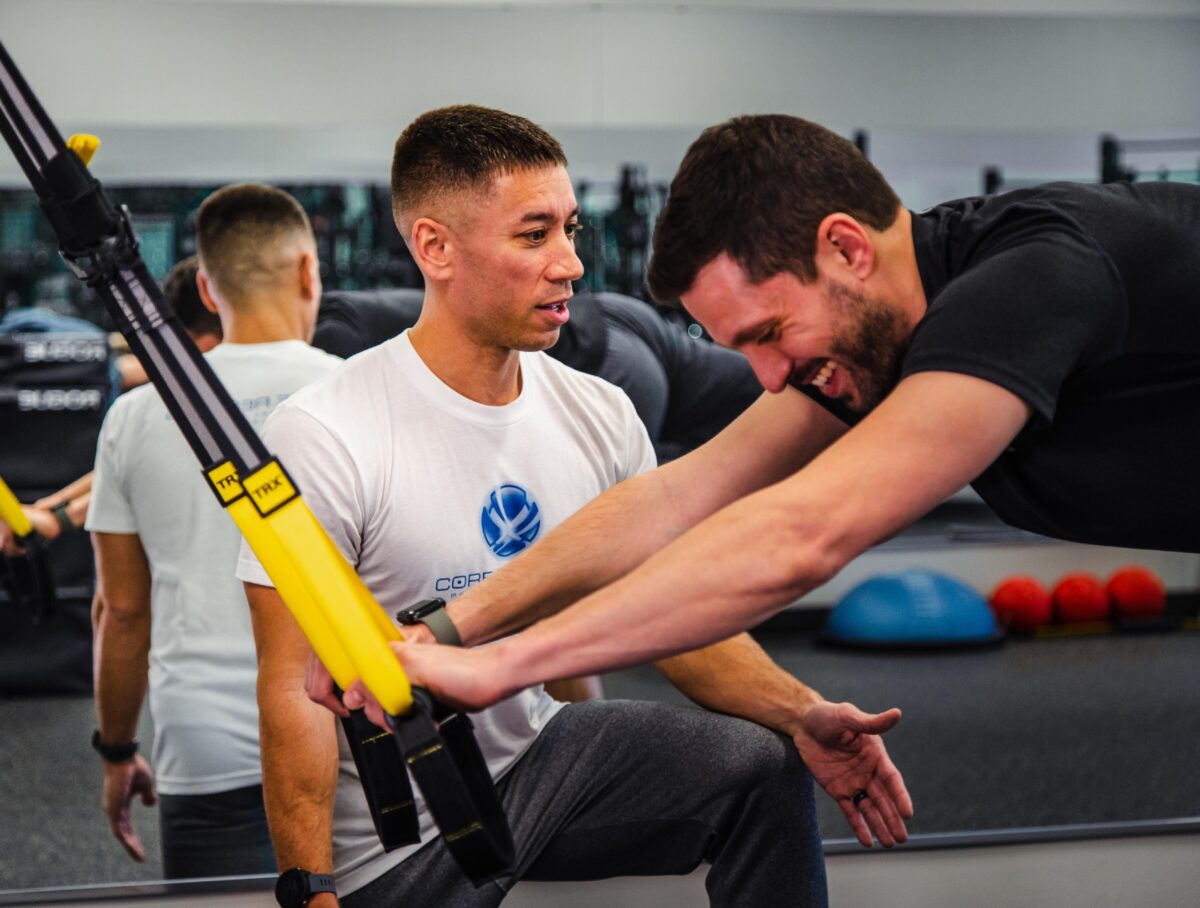
Aaron: Personal training is for anyone who is looking for an individualized approach to their health and fitness. Our clients range from semi-pro athletes, to urban professionals, to stay-at-home parents, to senior citizens. The “personal” aspect of this environment allows us to cater to each individual’s needs and ability levels. It provides structure, guidance, and accountability.

Jaime: How does strength training enhance people’s lives?

Aaron: Strength training can benefit everyone at every age throughout their lives. Some of the most important benefits include: lowering risk of injury, increasing strength of muscles and bones, decreasing risk of falling, boosting mood and reducing anxiety, helping to manage blood sugar, and also decreasing stubborn abdominal fat.

Jaime: What are the key principles of effective strength training?

Aaron: The key principles to an effective strength training program are consistency along with progressive overload. Consistency is crucial for stacking results, and then making sure to incrementally increase weights over time to force adaptation.

Jaime: How do you customize a strength training program for individuals with different fitness levels and goals?

Aaron: One of the biggest benefits of personal training is each client gets an individualized program. The program is specific to their goals, as well as takes into account where they’re starting from physically. During the initial session, our trainers take the client through an assessment or “screening workout” in order to get a baseline of how they move, as well as assess their strength and conditioning levels. This information provides a blueprint for planning a program specific to their body and goals. Every client is unique, with a unique physical history that’s taken into account when starting a new program. Over time, as your relationship with your trainer develops and abilities change, the trainer is able to adapt your ever-evolving program to meet your needs.

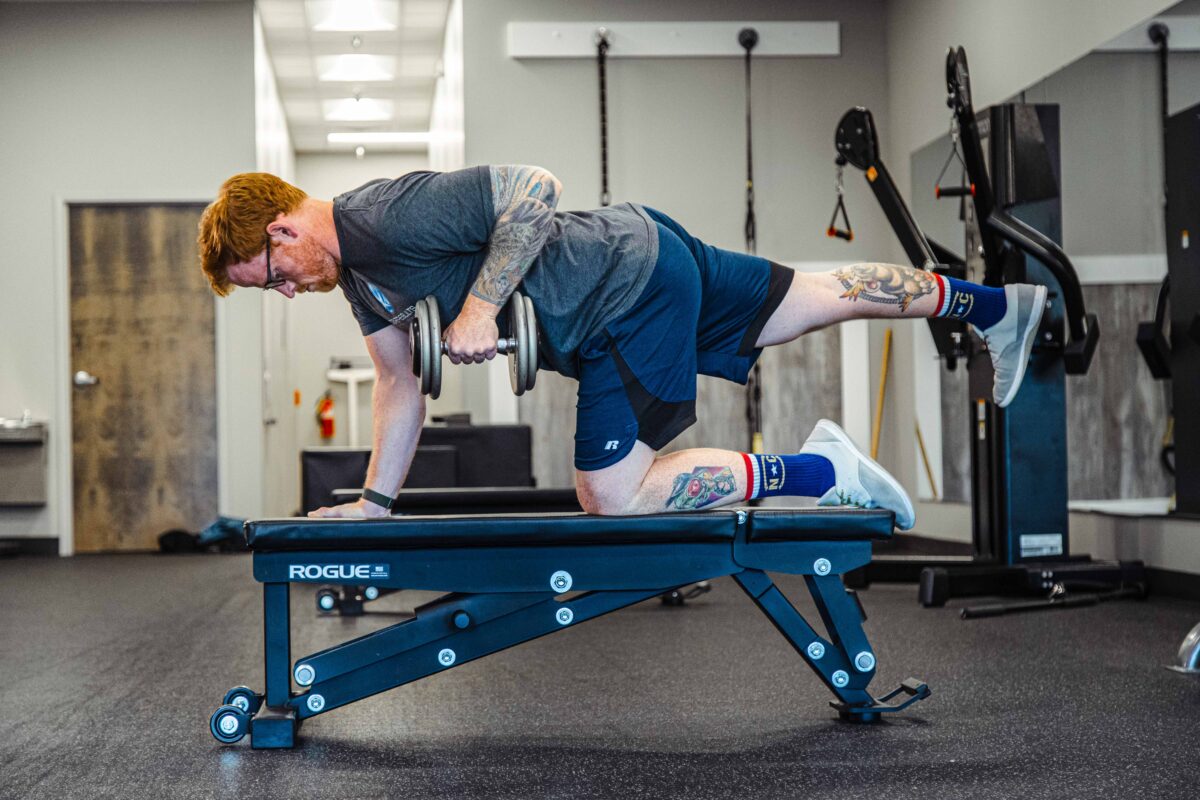
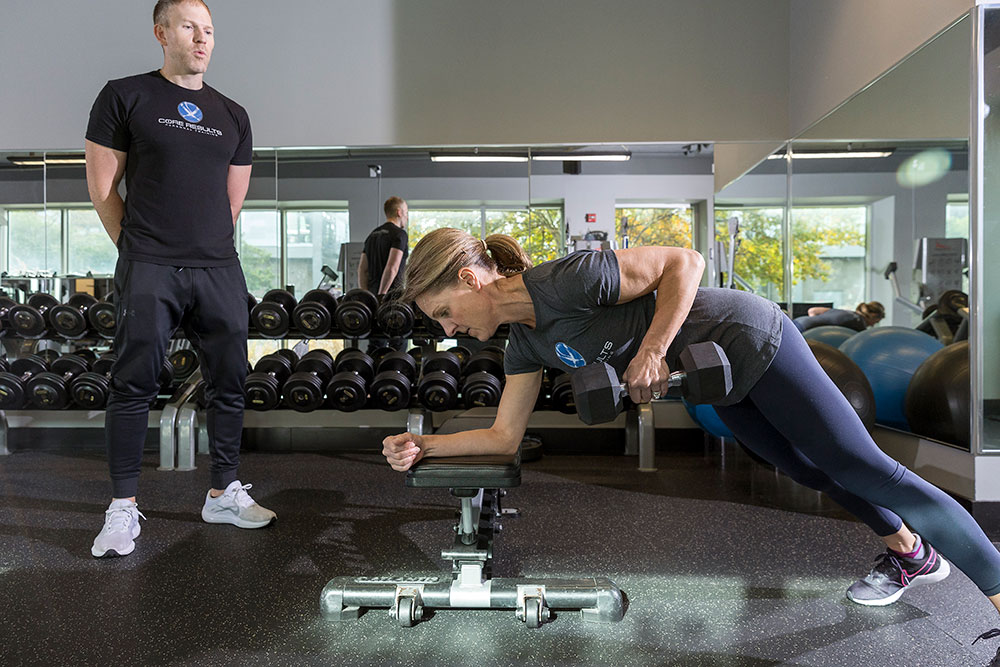
This exercise is like a superhero move, hitting your core, shoulders, upper and lower body all at once. It’s the ultimate multitasker exercise that’ll leave you feeling like a fitness rockstar!

Jaime: What advice do you have for clients who are new to strength training and may feel intimidated and unsure where to start?

Aaron: My best advice for anyone new to strength training is that it’s never too late to start. Get some professional help to learn the foundational movement patterns necessary to maximize your time and prevent risk of injury. Strength training will increase the quality of your life, especially as we age. It’s also important to choose exercises that align with your personal goals. In our boutique studio setting, each client works independently with their trainer, which provides a very non-intimidating environment. Our trainers and clients work together to be inclusive and encouraging to each other.

Jaime: How long does it take to see results?

Aaron: Someone new to strength training can expect to feel results in as little as a few sessions. With that being said, the initial adaptations during the first 6-8 weeks of a program are largely neuromuscular in nature. The body first needs to learn the movements, and then it will begin making changes to the muscle fibers’ strength and size.

5 Tips for Strength Training from Aaron @ Core Results Personal Training:

  1. Proper warmup is key in order to increase core body temperature and get blood flow to the working muscles. By doing this you are gradually preparing the body to work and in turn will decrease your risk of injury. It’s also a great time to work on dynamic flexibility and mobility (stretches with movement with the intent of increasing range of motion).
  2. Focus on proper technique to maximize working the intended muscle groups and decrease risk of injury.
  3. Make sure you’re always keeping progression in mind. The goal is to get stronger, so if an exercise begins to get easier, increase the load.
  4. Slow and controlled is the best way to keep the muscles under tension, which results in maximum adaptations and gains.
  5. Focus on the muscle groups you are intending to train. The body is smart and will constantly try to compensate, especially when working weaker muscles. The strong muscles try to take over and do the work. Being mindful creates a mind-body connection and helps stimulate the targeted muscles.

Core Results Personal Training
coreresults.net

Free Weights vs. Machine Weights: A Comparison of the Two

There is a lot of debate in the fitness world on whether free weights or machine weights are more effective. Both methods have their advantages. Free weights are less limiting when it comes to range of motion, enabling you to strengthen a wider range of muscle groups. Machine weights, offer a different advantage: the ability to isolate and target specific muscles. Below you will find a breakdown of the differences and benefits as well as tips to combine the two for optimal results.

Free Weights

The free weight advantage: pros of using free weights include an increased capacity to build strength in the stabilizer muscles and increased versatility.

When using free weights, both the muscles you target and your stabilizer muscles get a workout. Which muscles are stabilizers you may ask? It all depends on the type of exercise you are doing. Stabilizer muscles are those that keep your body balanced and steady when performing a set. The stronger your stabilizer muscles are, the less likely you are to incur an injury both in the gym and out on the field.

Another advantage is increased versatility. With free weights, your options are essentially limitless. A set of dumbbells can be used to work everything from your glutes to your biceps. For additional muscle mass, simply increase your weight as you go along.

Tip: While free weights give you the ability to perform a wider range of motion, it is important to remember to use the proper technique to avoid injury. Your personal trainer will not only show you how to do a free weight exercise, but will also correct you as needed to ensure it is done safely. 

Machine Weights

The machine weight advantage: pros of using machine weights include the ability to isolate specific muscles and reduced risk of injury.

The ability to isolate muscle groups is particularly advantageous when fulfilling muscle specific workout plans or post rehabilitation. Physical therapists often prescribe isolation exercises post surgery to strengthen muscles that have weakened from lack of use.

Isolation can also be helpful to solve for muscular imbalances, e.g., quad dominance. Because machines essentially force you into the proper technique/position, there is less likelihood that further injury will occur and less of a learning curve for beginners.

Benefits of Combining the Two

Both free weights and machine weights have their advantages. Fortunately, you do not have to choose between the two. In fact, the best exercise plans include a combination of free and machine weights for optimal strength and conditioning.

Whether you are looking to increase strength, lose weight or recover from a past injury, our personal trainers will work with you to develop a comprehensive exercise plan. They will show you how to use each set of equipment, check for comprehension and ensure the proper technique for optimal results. Learn more about what to expect from our trainers at Core Results.

Strength & Power: Training Tools for Endurance Athletes

Endurance athletes require special training to ensure their muscles can support intense activity for extended periods of time. Many endurance athletes avoid the weight room with the mindset that additional muscle mass will slow them down. It may seem counterintuitive, but stronger muscles are actually what power the body to move faster, for longer.

At Core Results Personal Training, we train endurance athletes for two things: strength and power. The two elements go hand and hand. Strength drives power, and with more power, comes more speed. Similar to a car and its engine, stronger muscles generate more power. The more power you have, the faster you reach your destination.

This same analogy can be applied to any endurance sport, e.g., running, wrestling, paddling, climbing and more. Essentially, your performance in any physical activity, requiring repetitive use of the same muscles for a prolonged period of time, is greatly enhanced by investing time and energy into strengthening those muscles.

Cyclists, long distance runners, rowers and other endurance athletes already get plenty of cardio. By training for strength and power, endurance athletes can help avoid injury and accelerate faster recovery for any damage that does occur.

“When it comes to injury prevention, we especially focus on strengthening accessory muscles. We often have ‘quad dominant’ athletes, cyclists and runners, for instance, who come in with large quad muscles supported by small hamstrings and glutes. Our job is to design a well balanced program that brings everything up to par,” says Josh Hutchins, Certified Strength & Conditioning Specialist and Owner of Core Results Personal Training.  

Quad dominance takes place when the quad muscles do the work of the hamstrings and glutes. It commonly occurs in long distance runners and results in bodily imbalance, heightened injury risk and hindered performance. With a well-balanced training program that raises accessory muscles up to par, endurance athletes can expect more speed and less susceptibility to muscular imbalance related injuries. 

These strength training exercises for endurance are sure to take you the distance:

One Leg Glute Bridge

If you are struggling with quad dominance, you are going to want to strengthen the hamstrings and glutes.

The one leg glute bridge is an excellent way to bring those accessory muscles up to par. Laying on the floor with your feet flat and legs bent, raise one leg up and pull your knee to your chest to start. Extend your hips upward and lift your glutes off of the ground. This exercise will feel natural to runners and bikers, as it mimics the drive phase.

Dumbbell Squats

When training for a marathon, triathlon or other long distance sport requiring major use of your leg muscles, dumbbell squats are a great way to build some serious horsepower. Dumbbell squats primarily strengthen your lower back, front thighs and gluteal muscle groups, then hamstrings and calves.

Find a comfortable dumbbell weight that works for you and work your way up. Three sets of ten is a good place to start. 

Resistance Band Row & Cable Row

The resistance band row and cable row strengthen the upper back muscles around your shoulders. Strengthening these muscles is key for maintaining good posture for long periods of time, e.g., long distance rowing and biking.

When doing the resistance band row or cable row, be sure to:

  • Stand tall holding the handles out front.
  • Drive your elbows back.
  • Focus on pinching your shoulder blades.
  • And don’t shrug!

Whether you are training to beat your best finish time or looking to increase your endurance overall, Core Results Personal Training will help you get there. Many of our personal trainers specialize in athletic training and have competed in national endurance competitions. Contact Core Results for your first FREE session today!

Get the Results You Want with Fast Paced Exercise, Resistance Training & Light Calisthenics

Looking to get fit but not sure where to start? Fast paced exercises, resistance training and light calisthenics are all great methods for getting the results you want.

Fast Paced Exercise  

Fast paced exercises are high in intensity and often the primary component of full body workouts like cross fit and circuit training.

Results: Improved body function, metabolism, movement and performance.

Additional benefits include time efficiency. Fast paced workouts, like the tabata sequence, can be completed in less than 30 minutes, an ideal solution for those looking for a way to get fit without dedicating a lot of time. The tabata sequence entails engaging in high intensity exercise for 20 seconds followed by 10 seconds of rest. The cycle is then repeated eight times for a total of four minutes of fast paced exercise. For full body results, work a different part of your body for each 4-minute interval, e.g., push ups, walking lunges and kettlebell swings.

Resistance Training

Resistance training includes any exercise when the muscles contract against an external resistance like dumbbells, weight machines, elastic bands or even your own body weight.

Results: Increased strength, tone, mass, and/or muscular endurance.

Common types of resistance exercise include power lifting, Olympic weight lifting, strength training and weight lifting. Increased strength is best achieved by adding weight over time gradually as muscles accustom to each level of resistance. Once a rep feels easy to complete, go ahead and add more weight. This will increase your strength overtime. Beginners typically see the fastest results, as there is a larger window for improvement in the early stages of resistance training. After a few months, gains will level off and additional sets will need to be completed to build additional strength.

How often should you lift for optimal resistance? The American College of Sports Medicine recommends a minimum of two nonconsecutive days each week.

Light Calisthenics

Light calisthenics are exercises that can be achieved at moderate intensity for 10 minutes or more without stopping. Light calisthenics are ideal for beginners, as they can help achieve visible results in a short amount of time.

Results: Increased flexibility, endurance and strength.

Light calisthenics use the whole body cohesively, meaning you are utilizing all of your strength and tension to complete the exercises, which in turn yields full body results. That being said, it is advantageous to start with your core, as it is the center of your strength. A strong core helps strengthen the rest of the body. For fast, visible results in the abdominal region, get started with a few sets of hanging leg raises and windshield wipers. 

Get the results you want with fast paced exercises, resistance training and light calisthenics. Whatever it is you are looking to achieve, Core Results Personal Training will help you get there. After an initial consult, we will design a program based 100% on your needs and goals that will include everything from strength training to cardio, and nutrition. Meet our team of experienced personal trainers today!

Is a Whole Food, Plant Based Diet Right for You?

by Aaron Hornstra, CSCS

Thanks to the hit Netflix documentary “What the Health”, there has been an increase in popularity and awareness around a vegan or plant based diet.  The positive effects on our environment are undeniable; however, the question remains – Are whole food, plant based diets really healthier for us, and if so how do they affect our performance when training?  Should this particular diet be recommended for athletes and non-athletes alike?  Although limited research has been documented, the latest from the NSCA suggests a plant based diet, in accordance with the American Dietetic Association guidelines, CAN in fact be a viable option for health AND performance.

Whole Food Plant Based Diet

With that being said, over the years, I have witnessed the challenges clients who participate in such a restrictive diet plan face in order to consume an adequate amount of high quality protein required to achieve optimal muscle growth. In addition, per the NCSA article, research shows that those who follow whole food, plant based diets tend to have lower intakes of some very important nutrients including vitamin B-12, calcium, zinc, creatine, and omega 3 fatty acids.  These nutrients play an important role when talking about overall health and performance.

So while the available research shows that a whole food plant based diet can be a viable option for a health and performance, we must recognize that as with any restrictive diet, the client must be especially diligent in order to maintain a well-balanced diet within its parameters.

Here is the latest research article referenced above from the NSCA.
Decide for yourself if it’s right for you!

 https://www.nsca.com/education/articles/ptq/whole-food-plant-based-diets/?srsltid=AfmBOopg30AN6VFoT1lq371mC_FgbZOxYkyzNG2-7cpbjsQuDCPHUyBN